
Why Do Online Businesses Fail? 10 Reasons (And How to Avoid Them)
 tobs ·
·
5 min read
tobs ·
·
5 min read
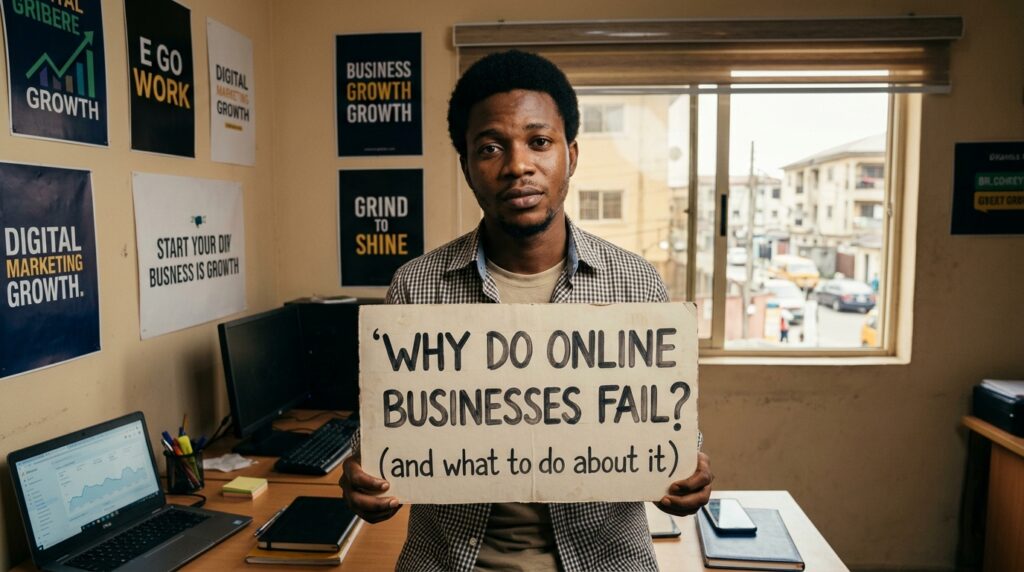
Starting an online business has never been easier — a website, a social media page, or an affiliate link is often all it takes to get going. But easy to start doesn’t mean easy to sustain.
So why do online businesses fail so often, even when the idea itself was solid? Usually it’s not one dramatic mistake — it’s a handful of avoidable patterns that repeat across almost every failed venture.
Here are the 10 most common reasons, and what to do instead.
1. No Clear Target Audience
Trying to sell “to everyone” usually means selling to no one. Many new online business owners skip defining who their customer actually is — their problems, budget, and where they spend time online — and instead market broadly, hoping enough of the right people notice.
Fix: Get specific. Write down exactly who your ideal customer is, what problem they have, and where they already look for solutions, before you spend money on marketing.
2. Underestimating How Long It Takes
Online business content often makes success look fast — a viral post, a “6-figure month” screenshot. In reality, most sustainable online businesses take months, sometimes years, of consistent effort before they become reliably profitable. People who expect quick results often quit right before momentum would have built.
Fix: Set a realistic timeline (6-12 months minimum for most models) and measure progress against small, weekly milestones rather than expecting an early breakthrough.
3. Running Out of Money Before Running Out of Ideas
A lot of online businesses don’t fail because the idea was bad — they fail because the owner ran out of runway before the business had time to work.
This is especially common when someone quits a full-time income too early, or reinvests every available dollar into ads or tools without a cushion.
Fix: Keep a financial buffer, and treat your business’s growth timeline as longer than you’d like it to be. Reinvest gradually, not all at once.
4. No Real Product-Market Fit
Some businesses fail because they’re solving a problem that isn’t painful enough for people to pay for, or the “problem” doesn’t really exist outside the founder’s assumption.
This is common in trend-chasing niches, where people copy what looks successful without testing whether their specific version is actually wanted.
Fix: Validate demand before building fully — presell, ask for real payment commitments, or start with a minimum version of the offer before investing heavily.
5. Inconsistent Effort
Online business growth — whether it’s content, SEO, ads, or outreach — compounds. Posting for two weeks, stopping for a month, then starting again resets momentum every time.
This is one of the most common (and most avoidable) failure patterns, especially in content-based businesses like blogs, YouTube channels, or social selling.
Fix: Choose a publishing or outreach cadence you can sustain indefinitely, even if it’s smaller than you’d like, and protect that consistency over intensity.
6. Chasing Every New Trend or “Opportunity”
Jumping from dropshipping to affiliate marketing to crypto to print-on-demand — each abandoned before it had time to work — is one of the fastest ways to end up with several half-built businesses and no working one.
This shows up a lot in trading-adjacent spaces too: chasing whichever broker, signal group, or “opportunity” is trending this month instead of building depth in one approach.
Fix: Pick one model, commit to a real testing period (months, not days), and resist switching until you’ve genuinely given it a fair shot.
7. Ignoring the Numbers
Many online business owners don’t track basic numbers — cost per customer, actual profit margin after fees, how many visitors convert into buyers. Without this, it’s impossible to know whether the business is actually working or just busy.
Fix: Track a small set of core numbers weekly, even if it’s a simple spreadsheet. You can’t fix what you’re not measuring.
8. Poor Cash Flow or Pricing Mistakes
Pricing too low to seem competitive, or not accounting for platform fees, payment processing costs, ad spend, and taxes, quietly kills a lot of otherwise-working businesses.
Revenue can look healthy while actual profit is thin or negative.
Fix: Build pricing around your full cost structure, not just what feels competitive, and review margins regularly as costs change.
9. Treating It Like a Side Hobby Instead of a Business
Some ventures fail simply because they’re never treated with the consistency, planning, or accountability of a real business — no goals, no schedule, no review of what’s working.
This is especially common with income streams that started as “extra money on the side” (affiliate links, rebate programs, small referral commissions) and never graduated into an actual system.
Fix: Set real goals and review your progress on a schedule, even if you’re working on it part-time. Treat it like a business from day one, not “later once it’s bigger.”
10. No Distribution Plan
A good product or offer with no way to reach people goes nowhere. Many online businesses focus entirely on building the offer and treat marketing/distribution as an afterthought — only to discover that getting in front of the right audience is actually the hardest part.
Fix: Build your distribution plan (SEO, social, partnerships, paid ads, referrals) alongside your offer, not after it’s finished.
Bottom Line
So, why do online businesses fail? Rarely from one big mistake — usually from a slow accumulation of avoidable ones: unclear audience, inconsistent effort, poor money management, and unrealistic timelines.
The businesses that survive aren’t necessarily the ones with the best idea; they’re usually the ones that stayed consistent long enough, tracked their numbers, and didn’t quit right before things started working.
If you’re building any kind of online income right now — whether that’s content, affiliate work, or trading-related income streams — the same principles apply: pick one thing, give it real time, track what’s actually happening, and don’t confuse activity with progress.
Do you need a clear cut online business that can help you make money consistently? CLICK HERE TO LEARN HOW TO MAKE MONEY WITH AI

Written by tobs
Not a licensed financial advisor. Always verify before you invest.
Leave a Reply